Showing posts with label Japan. Show all posts

Monday, January 15, 2024

Japan with a Toddler

We traveled to Japan with our 20 month old this summer. Here's a few things we found helpful.

You can also read more about travel in Japan.

Our trip centered around a family wedding outside of Tokyo, and our home base was in Echigo-Yuzawa in the Japanese Alps in Niigata. It's an easy Shinkansen ride into Tokyo and we made the trip a few times.

Timing

Good weather is always great to have during vacation, but all the more so when you're toting around a toddler in a stroller and their goods.

Tokyo (like a lot of the world) has gotten hotter, and unbearably so in the summer. Summer in Tokyo has always been hot and humid, but I don’t think the temperature went below 90F at night the entire time we were there, and was into 100s during day. That seems to be the new norm from mid-July to August

June into early July is the rainy season.

So spring and fall are the most comfortable times to go if you have some flexibility.

Tokyo

As we have traveled with our toddler, we have found limiting the number of hotel changes really helps with our routine and logistics. Moving two adults is easy, especially with luggage shipping in Japan, but not trivial with toddler setup in tow. 

Tokyo with a few day trips sound great. I’m a huge fan of Nikko, and Kamakura is an easy day trip as well.

Within Tokyo, Odaiba has family friendly activities. teamlab Planet was fun if your kid doesn’t get too overloaded with sensory stimulation (plan to bring a carrier though, no stroller inside and you’ll need to carry at some parts, without ruining the surprise).

I did find the expat blogs, like this one, super helpful. This was their post on Odaiba with kids

Logistics

You’ll want a travel stroller. Our monster American ones won’t cut it on their narrow streets and transport. We love the Mountain Buggy. It was also was nice to have the lie-flat for changing

The city is pretty accessible, especially after the Olympics, though you might have to search for the elevator (easily pronounced as “ele be-ta-“). Here's a cheatsheet for Japanese kid-related words

I highly recommend shipping luggage from the airport to hotel and between and hotels — Google “takuhaibin” or just shipping luggage in Tokyo. It’s about $15-25 per suitcase and super easy. Hotels can arrange for you if you ask in advance, and there are a few vendors at the airport (I use ABC or Yamato)

Onsen

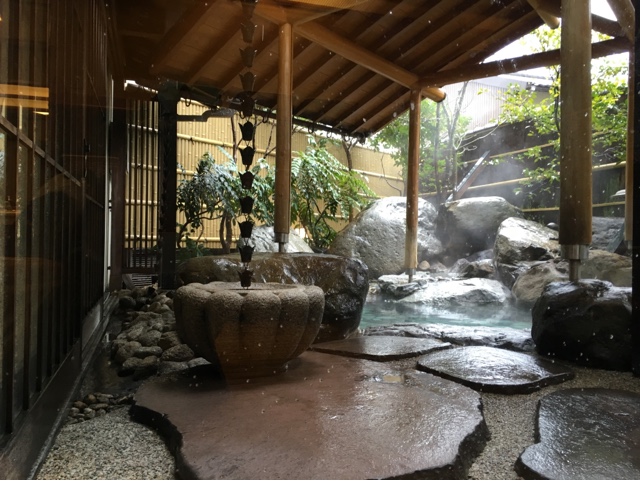
I love going to onsen, the hot springs and public baths, and the ryokans that have them. The bath may feel hot for children, but they can still sit with you to bath in the shower. Some rooms may have in-room baths as well. If your child is not potty-trained, just be careful with the public baths

I was excited to see this Kinosaki post on visiting my favorite onsen town with children.

Eating

Our kid is a fairly easy eater so she was ok eating out with us. Sushi restaurants are challenging because they generally don’t have anything else on the menu, but many family restaurants and izakaya have many kid-friendly options, including simple rice, miso soup, and edamame (which are all Yuna favorites). 

We regularly stopped at convenience stores for snacks -- the bread and ready made section (onigiri 🍙 in particular) were favorites.

In addition to water, “mugi-cha” or barley tea, is not caffeinated and a kid favorite for drinks

Friday, January 15, 2016

My Japanese-Inspired Home

If I ever have the luxury to design my house from scratch, I want to incorporate basic Japanese elements into my home...

Foyer
Japanese homes are strictly "shoes off" and the foyer is architected to easily separate the inside space from the outdoors. When one enters the home, whether is it a grand house or a tiny studio, there will be a continuation of the outdoor level inside and a physical step up where the "home" begins. Shoes are never ever worn above the step, even for the all-too-common "oh shoot, I just need to run in and get..." situation in a US shoes-off home.


Japanese Bath
The modern Japanese bath is just a brilliant and sustainable concept. There's an enclosed space with both a "shower" and "bath", but you clean yourself with the shower before you bathe so that the clean bath water can be reheated and re-used by the family (or several days for a single person). There is a cover for the bath that is rolled over during the shower, then removed for bathing. The whole room is equivalent to the "shower" space, with drainage and door to close off the space.

The hot water system is shower is controlled by a panels with options for temperature, water volume, and timer, and sometimes even multiple panels so that you can remotely heat up the bath from your kitchen and tells you when it's ready!

The bath is also taller so that one can sit upright and be covered above the shoulders. Tubs are not made to stretch out like Western bathtubs, but to sit with knees tucked up and warm up.

Japanese Toilet
There is a ton written on this topic in American media, but who doesn't want a warm seat and bidet when they do their business? As the founder of toilet product Tushy said, if a bird pooped on your head, would you wipe with a tissue or use water to make sure you're really clean?

Thursday, January 14, 2016

Kinosaki Onsen 城崎温泉

Kinosaki Onsen is a lovely town on the west coast of Japan that is known for its hot springs. I stayed at a "ryokan" (Japanese guesthouse) and spent two blissful days eating amazing food, drinking sake, and steeping in natural hot springs.

Kinosaki Onsen is approximately five hours by train from Tokyo. Take the Shinkansen (bullet train) three hours to Kyoto, then another express train for two hours through beautiful countryside to Kinosaki Onsen. 
Note: I highly recommend getting the JR Pass before arriving in Japan - it's a brilliant rail pass only available to foreigners that is all-you-can-ride Japan Railways, including the Shinkansen. You can get reserve seats for no cost as well. You'll usually make up the cost of the pass with one Shinkansen trip.

Shinkansen Pro-tip: Try to get seat E if you reserve seats - the north side window of the train (right side on way south, left north) generally has better views, including Mount Fuji about an hour out from Tokyo. Also fun to track your blue dot on Google Maps, you'll never see the dot move so fast!!

Stay at a Ryokan!
I stayed at Ryokufukaku (beautiful Japanese websiteEnglish tourist site). 25,000 yen per night for a tatami room, breakfast and dinner, ryokan's baths, and access to the seven "soto-yu" hot springs in town. Pretty incredible deal, as the dinner could easily cost well over 10,000 yen.

What to do in Kinosaki:
    • Onsen ("hot springs") that have been here for 1400 years of geothermal activity is the main attraction and a must do. The ryokan's rent yukata (and hakama overcoats in winter) for guests to wear out to baths. I literally wore that all day. See below for the seven "soto-yu"
    • Ropeway at the west end of town will give you a beautiful view of the village and surrounding mountains, all the way to the Sea of Japan.
    • Drink local sake - this is a must. Sakamoto-ya Sakaya 坂本屋酒屋 is a liquor shop that offers shots of sake for 300 yen. Two tables outside and four stools at a little window bar to snack and drink your sake or beer or liquor. They have local brews of sake, beer and liqueurs that you can try before you buy. Highly recommend the "ji-zake" 地酒, local fresh brewed sake out of a keg, super rich and potent.
    • Eat seafood, Tajima beef and Izushi soba. The ryokan and restaurants alike get fresh seafood daily from the Sea of Japan, and the area is known for crab in winter months.

      Izushi is a nearby town, known for its soba plates, eaten five different ways for each serving of five plates (soba sauce, plus grated daikon and negi, plus wasabi, plus grated mountain yam, plus a raw egg).

    • Pottery making at Rakugaki is fun and you get something to keep from it. You can make designs, actually shape the clay, or decorate small jewelry. If you paint or sculpt, they'll fire the clay and ship you the final pottery (even overseas, was 1,200 yen to the US). Roughly 2,400 yen to make a cup and chopstick holder.
    Onsen
    There are seven "soto-yu" 外湯, or "outside springs" that most ryokan's will provide you a pass to enter for free. Each spring also has an a la carte price for day trippers.

    So the seven hot springs. Each is named "xx no Yu", which means "Hot Spring of xx". I'm partial to the ones with "roten-buro" or outdoor baths. In order of my favorite:
    Gosha no Yu 御所の湯 is styled after a Kyoto palace, the largest and most elegant of the seven, with indoor, steam room and outdoor baths besides several waterfalls. They rotate the men's and women's bath daily so try to hit Gosha no Yu two days in a row to see both sides.

    Ichi no Yu 一の湯 is the landmark Kinosaki Onsen and has an outdoor bath carved into a cave.
    Kou no Yu 鴻の湯 is the farthest onsen by the ropeway and has an outdoor bath covered by a pagoda.
    Mandara no Yu まんだらの湯 had a small wooden bath that seats two by the forest
    Sato no Yu さとの湯 is the newest and most modern bath, with multiple floors, baths and saunas. The rooftop outdoor bath feels a bit kitschy but is nice, and I enjoyed the dry heat, steam and penguin (0-5 degree C!) saunas
    Yanagi no Yu 柳の湯 is one of the smallest but with beautiful wood in the high beams that make up the indoor bath
    Jizo no Yu 地蔵の湯 has an indoor bath inside a nice multistory inn.

    Ashi no Yu 足の湯 are foot baths along the main roads and free for anyone to stop and dip their feet. Sato no Yu and Yanagi no Yu have them, and there is one near the corner by Ichi no Yu with a beautiful view of the street (also conveniently close to Sakamotoya liquor shop if you get a sake to go) and also by the ropeway. Good stop while you wait 11 min for your onsen eggs.


    By the way, your ryokan is likely to have its own hot spring, and perhaps even some private Onsen that you can reserve!

    Last note: Kinosaki Onsen is a pretty local tourist spot. Even the Japanese tourists are primarily from the Kansai region, and while they're starting to see more Chinese tourists, non-Asian foreigners are less common. So just note, it's a tourist spot with very little English speakers, though Kansai folks are super friendly as a whole and I'm sure they will do everything in their power to be hospitable!

    Wednesday, February 27, 2013

    Tokyo Layover

    *This was an email I sent a friend who had a 9 hour layover at Narita. Here's some advice on what to do if you only have a few hours to get out to Tokyo and back!

    **If you have the opportunity to fly through Haneda (HND) rather than Narita (NRT), you'll be much closer to central Tokyo (20 min train ride)

    So 9 hours is a lot of time to spend in Narita. Unfortunately it is 60-90 min from Tokyo, but if you don't mind packing in the visit, I would definitely try to get into the city for a few hours and for a meal or two, especially if you haven't been. This also depends on what time your layover is since transportation is an issue in the odd hours of the night. Here's my blog with general info on Japan and Tokyo.

    You can get to Tokyo on the limousine bus or Narita Express train -- roughly same price (about 3000 yen) but timing is different (buses run every 30-60 min depending on the hotel, Narita Express every 15 min) and the train is more reliable during rush hour. The buses go to major hotels in many parts of the city, Narita Express goes to a few major train stations (go to Tokyo or Shinjuku).
    The bus will be right outside of where you come out of customs, look for the orange sign. The bus schedules will be on the board and you'll have to look for the specific neighborhood/hotel. I would recommend these two bus lines
    • Ginza-Shiodome - get off at Imperial Hotel (Frank Lloyd Wright building!) and you can wander around Ginza on Omotesando Road, equivalent to 5th Ave in NY or Rodeo Drive (or Jarod's favorite Gangnam) Also short walk to the Imperial Palace, and there are great little strips of restaurants and bars near Shimbashi train station. 
    • Shibuya - get off at Shibuya Excel Hotel Tokyu and Shibuya is a fun area with younger shopping, bars and restaurants. It also has the crazy huge intersection (8 ways) that you always see in movies (it's the one in Lost in Translation with the pink dinosaur). One stop from Harajuku which is a fun strip and that is right at Meiji Jingu Shrine and Yoyogi Park. Actually if you're there on Sunday, the "Harajuku girls" who get all dressed up hang out at the Harajuku station bridge by Yoyogi Park on Sundays, you should definitely check it out! 
    The Narita Express will get you to Tokyo or Shinjuku station. The train platform will be down the escalators from the arrivals area. You want the JR Narita Express, not the Keio Skyliner (also to Tokyo but to different parts of the city). Shinjuku is closer to Shibuya and Tokyo is closer to Ginza and Tsukiji. Both of those stations are enormous, but the signs are in English to get out. Would be easiest to find (or ask for) the metro - the subway is color coded and numbered and in English.
     
    If you have evening time and are leaving from Shinjuku station, stop at the Park Hyatt Hotel which is a short walk from the station. The New York bar at the top is where Bill Murray spends most of his time in Lost in Translation. Expensive drinks, but beautiful night city views.  
     
    ***Note: The famous Tsukiji fish markets were shuttered and moved to Toyosu in preparation for the Tokyo Olympics and to modernize this important market's infrastructure. Toyosu website. Sushi-bun is also at Toyosu now.

    On Tsukiji. As Jarod knows, it is my favorite place in the world to eat and if you have a chance to go, it is totally worth it! It is the largest fish market in the world, and though they don't love tourists in the tuna auctions these days, you can walk around miles of the market and also get the best sushi in the outskirts of the market. Open from wee hours of the morning to about 2pm. Sushi-bun is my favorite favorite and I've sent a few folks there so hopefully it's findable. I just realized if you're there on Sun Mar 3, Tsukiji market will be closed on Sundays but not sure when your actual layover is. Check out the Tsukiji market calendar - red dots are closed days.

    Note, most people will not speak English, but if you show them the names of places spelled out they can probably point you in the right way. So it's worth having a print out or your phone handy.

    It looks like you can do baggage storage at Narita if you have luggage btw. I've never used storage services, though my family always used ABC for delivery. But depends on what terminal really, I'm sure they're all fine.

    Enjoy!

    PS: Adding a 36 Hours in Tokyo article from the New York Times (May 2013)

    Thursday, September 18, 2008

    Tsukiji 築地

    *UPDATE: Sad, due to some raucous foreigners, Tsukiji will be closed to tourists from 12/15-1/17 (Japanese article)

    I have written a ton about Tokyo and the fish market as well as the Tsukiji restaurants. Had another amazing meal at Sushi-bun, yum :) Adding a video of the auction from 6am this morning!

    Wednesday, August 8, 2007

    Japan

    **I have often been asked about travel advice for Japan. Here's a good start for planning a trip to Japan.

    What you do would probably depend on what your traveling style is, whether you like to hit all the sites vs. more chilling out, but hopefully I can offer some suggestions for both.

    The two cities that are the staples for traveling in Japan are Tokyo and Kyoto. Tokyo is the capital and center of just about everything, while Kyoto is the ancient capital with wonderful history. If you are going south, it would be worth going to Hiroshima and Miyajima. The museum in Hiroshima is incredibly powerful and my personal belief is that everyone should have to go there once in their lifetime. Miyajima is about half an hour from Hiroshima by ferry and is where the famous floating red Shinto gate on the ocean is. Another beautiful site is obviously Mt Fuji. I have never done the hike, but it can be done in July and August, you go the night before, hike though the night and summit in time for the sunrise.

    Tokyo
    So many things to do in Tokyo, I actually like it more for the experiential piece than sightseeing, great place for eating, drinking, walking around.

    Walk around Shibuya, maybe early evening/night, that’s where that huge intersection is you see in pictures all the time, I think it’s supposed to be the busiest in the world. Tons of shopping, restaurants and bars, and you will totally see the variety of Japanese pop culture there. FYI easy to get lost in there. And trains stop running around midnight. Not sure if you will be traveling with someone, but karaoke is a must. Integral part of Japanese pop culture.

    Also just for the experience, go to like Ikebukuro or Tokyo station during rush hour. Any train station actually at like 8am. Pretty intense just to see. Tokyo Station was completely renovated and has amazing new restaurant rows and shops, definitely worth wandering. Also check out Shin Maru Building across the street - the view of Tokyo station from the 7th Floor restaurant/bar patio is the best.

    Akihabara is the “electric city” where there are tons of electronics stores. Japanese electronics are so cool, I have spent hours in Big Camera, Yodobashi-camera and Sakura (equivalent to a Best Buy or Circuit City), though Akihabara are less branded retailers. Streets upon streets (and I use street liberally, many are alleyways) or shops that sell tvs and phones and computers and just gadgets.

    Ginza and Omotesando are the really ritzy high end areas where lots of foreigners (gaijin) live and where all the Gucci, Prada, etc stores are.

    Especially if you are jetlagged, I would go to the fish market at Toyosu* early in your week. The Tsukiji fish market was my favorite Tokyo site that I have brought many people to (old photos here). It's now Toyosu, and still the largest in the world, with 2000 metric tons of seafood passing through per day. The tuna auctions are exciting but done around 6am, and you need to apply for a spot to be on the floor. It's free to watch from the observation area above.  You can still walk around the the market to see all the seafood that you could ever imagine (and some that you couldn't dream of). Please keep in mind that this is an active market and these people's livelihoods -- stay out of their way!

    After the market, find the rows of sushi restaurants at Toyosu (and still in Tsukiji on the outskirt of the old markets). Some are more famous than others (hence the lines) and I have a favorite (check out Sushi-bun), but you can't go wrong here.

    *NOTE: Tsukiji still exists as a destination for restaurants and shops (recommend!), but the fish markets were moved to Toyosu in advance of the Tokyo Olympics and to modernize this important market. Toyosu market website and a guide to visiting.

    While we are on the topic of food, other things you should consume…
    • Yakitori grilled skewers of chicken and other meat/veg, and is so much more delicious than you would ever expect. Might be tough to order, so get a local to take you or be ready for a food adventure.
    • Kaiten sushi – others are better than me for sushi recs. Kaiten sushi is uniquely Japanese, and I think it's fun to experience. It comes around on conveyor belts and you pay by the plate. Can be very cost effective, kind of fast food though it’s good sushi
    • Ramen – especially if you can find a little ramen cart. But also great at Tokyo Station Ramen Street
    • Tempura – have the real stuff, nothing like the heavy greasy stuff you get here. If you can, high end places are this famous Ginza restaurant Ten-Ichi and these Tempura Yamonoue
    • “Bento” – go to a “conbini”, or convenience store like 7-11 or Lawson’s, and get the ready made food to go (bento = lunch set). Also check out "eki-ben" which are bento that you get at the train station for long train rides.
    • Beer – Japanese beer is great. “Nama” is the draft. Good stuff.
    • Izakaya are local bars with small plates. Apparently the Ichibangai street in Akabane (where my mom grew up) is now known as a destination for izakaya and cheap(er) eats!
    • Sake – have some beautiful, cold, unpasteurized ("nama") sake, there is nothing like it outside of Japan, because almost all sake that's exported has to be pasteurized to be shelf stable. Tsubo no Naka is my favorite Tokyo haunt, an all-you-can-drink sake bar, BYO food, and wonderful owner "Papa" to guide your evening
    Here's a NYT article on eating in Tokyo, and another on cheap recs.

    Also, summer is prime baseball season. If you can get tickets to a Tokyo Giants game (you can do it online, though you may need a Japanese address to get the tickets delivered, maybe your hotel?). They’re fun and pretty different from American games. The Giants are the biggest team in Japan, in that half of the country actually roots for them, huge empire (kind of Yankees-esque) and is where Hideki Matsui played. I actually took a classmate of mine from Kansas who was passing through Japan, and we had a great time. Watch for the little beer girls who carry quarter kegs on their backs, Zach got a huge kick out of that for some reason.

    Sumo would also be interesting to see. The tournaments occur six times a year and the tickets are quite expensive, but it is supposed to be a great experience.

    Pro-tip: Japan has many public holidays and a few holiday weeks (Golden Week, Obon, New Years) that you'll want to plan around.

    The Tokyo sightseeing stuff might be better gleaned from a guidebook, but here’s a quick list
    • Meiji Jingu – Meiji Shrine, beautiful and historic
    • Imperial Palace and Gardens
    • Senso-ji – also known as Asakusa Kannon, it’s the main Tokyo temple (see right). Nakamise-dori has lots of little shops and stuff, good for buying trinkets and gifts
    • Harakuju - center for fashion from high-end international showcases to bargain boutiques. Ometesando has the boutiques and Takashita-dori the teen culture
    • Tokyo Tower or Skytree
    • Tokyo Disneyland if that's your thing
    • teamLab Planets Tokyo in Toyosu is a cool digital museum
    For the totally rare experience, Ogasawara is an island off of Tokyo’s coast. It is a surfing mecca, supposed to be just beautiful, sea turtles and dolphins, great natural beauty, and odd nature (mushrooms that glow at night), and this is in Tokyo Prefecture. BUT there are not many ferries to the place, takes 25 hrs? But everyone who makes it there just comes back enthralled. The nature there is incredible because it’s so hard to get to, but supposed to be an incredible experience if you are looking for something off the beaten path.

    Here's a post on the Tokyo layover, if you only have a few hours to spend in the city!

    Nikko
    Nikko is a beautiful historical city in the mountains, and can be a day trip from Tokyo (about 2 hrs north by train). Toshugu is the famous shrine built by Tokugawa Ieyasu (shogun who started Edo-period) and you can also take a bus up to the beautiful Lake Chuzenji and Kegon Waterfall. If you can, I highly recommend staying at a ryokan at Okunikko. We stayed at Yu no Mori where every guest room has a private outdoor hot spring bath. As many with most ryokan, they serve a beautiful dinner and breakfast that's included in the price. 

    Kyoto
    Kyoto is beautiful and unusual in Japan that the architecture is intact because it was left untouched in the war. So there are temples and shrines that are over a thousand years old and the city has literally 150 or 200 shrines and temples I think. By the way, Japanese are generally one or both Shinto and Buddhist, and a lot of both are ingrained in the culture more than being active religions. Shrines are Shinto places of worship and temples are Buddhist. There is actually a path, I think it’s called the Philosopher’s Trail, that is probably one or two km, with some famous temples/shrines along the path.

    Some of the must sees in Kyoto…

    *Kinkaku-ji – temple that is painted completely in gold)
    *Ginkaku-ji – the sister temple with amazing gardens
    *Kiyomizu-dera – ancient wooden temple that overlooks city
    *Sanjusangen-do temple – there are 1001 sculptures of Buddhist gods there
    *Ryoan-ji – zen gardens
    *Nijo Castle – less a fortification than imperial court

    Nara (with Todai-ji and the HUGE Buddha) and Uji are both old cities that are near Kyoto and have many temples and shrines, but unless you are really interested in the ancient religious architecture (which I was so I saw a lot of), you might get your fill in Kyoto.

    Hiroshima This can be a day trip from Kyoto. I truly believe that everyone should go to the museum they have there. They still have a number of buildings they left as it was after the bomb (the famous dome is one), and the museum is both a memorial for those who were lost as well as a tribute to peace and education against war and nuclear weapons. Really powerful. Also eat okonomiyaki, one of the signature foods of the area.

    Miyajima
    This island is about half an hour from Hiroshima, and it has that shrine that floats on the water. I was really surprised to find that it only “floats” during high tide and that you can actually walk up to it during low tide, so I would make sure that you are there during high tide. Also can do a pretty cool hike to the top of the mountain there.

    Mt. Fuji
    A few hours from Tokyo, this would be awesome if you could fit it in. It is a 5-6 hour hike, I think, though I haven’t had the opportunity to do it yet. Not too difficult, and you can drive to a certain point. If you can stay at a minshuku (inn) for before and after, you can experience the hot springs, which you definitely should do. Either way, you should try to find the baths wherever you end up going. Very Japanese experience.

    Okinawa
    Okinawa has the most beautiful white sand beaches and would be a great break depending on what you're looking for in your trip. Very different from the rest of Japan, including their food!

    Onsen If you have a few days to go to an onsen area, I would HIGHLY recommend it. Onsen are hot springs that result from volcanic activity that created the Japanese islands and still rock them today with earthquakes. Atami, Hakone, and Izu are closer to Tokyo.

    Kinosaki Onsen is off the beaten path but one of my favorite trips I've taken in Japan. A beautiful village on the western Sea of Japan, it's about five hours from Tokyo (2 hrs past Kyoto) with lovely public hot springs and amazing seafood. Nothing better than walking around in a yukata (casual kimono) for three days, taking baths and drinking sake.

    ETC.
    There are so many other places that are not on this list or I haven't been. Other cities that may make your list are Osaka, Kobe and Nagoya, which are all major metropolitan areas with lots of commerce, but not sure how fun to visit. Kanazawa is a beautiful city on the Sea of Japan (west coast of main island Honshu) with well-preserved Edo-era feel and fantastic seafood.

    Hokkaido is the northern island, the biggest city is Sapporo. Hokkaido has world class snow in the winter for snowboarders/skiers, and phenomenal food (seafood and ramen to start).

    Traveling with kids is relatively easy in Japan. Here's more on traveling with a toddler